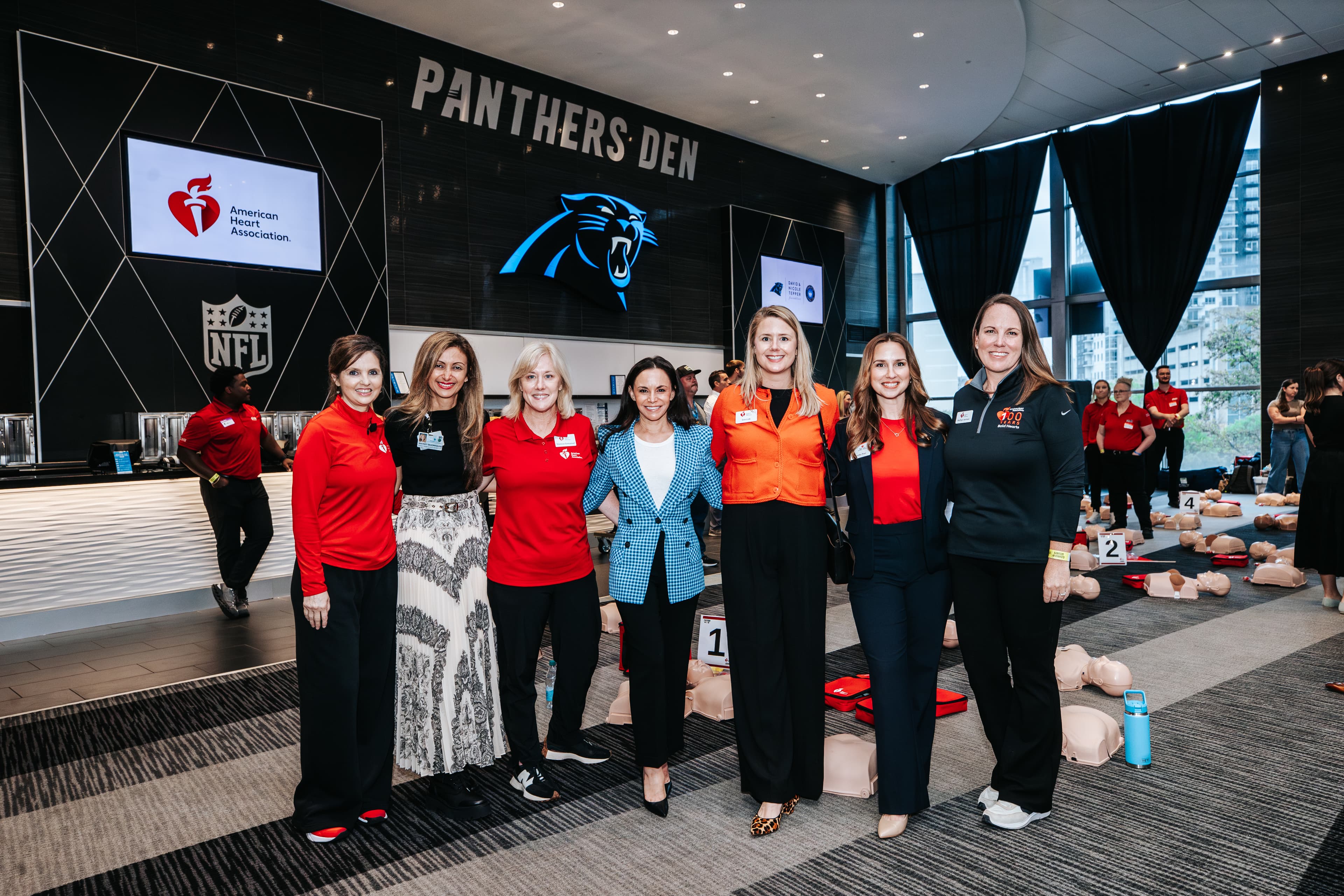
The American Heart Association and The David & Nicole Tepper Foundation are partnering to enhance community preparedness for cardiac emergencies through comprehensive CPR and AED education. With a $600,000 commitment, the initiative aims to train coaches, athletes, sports league officials, Mecklenburg County Sheriff's Department personnel, and residents in affordable housing communities.
Recent American Heart Association data reveals a critical need for widespread CPR training. Nearly 90% of cardiac arrests occurring outside hospitals result in death, largely because immediate CPR is not consistently administered. Immediate CPR intervention can potentially double or triple a victim's survival chances.
The foundation's support follows the high-profile cardiac arrest of Buffalo Bills safety Damar Hamlin during a 2023 Monday Night Football game. In response, the Teppers quickly implemented the Heartsaver® CPR AED course for all Tepper Sports & Entertainment staff and players, marking the first NFL team to offer comprehensive cardiovascular emergency response training.
The initiative extends beyond monetary support. At a recent training event at Bank of America Stadium, Tepper Sports & Entertainment employees received opportunities to acquire or renew their Heartsaver® credentials at no personal cost. This approach underscores the foundation's commitment to creating a community of trained, confident lifesavers.
Encouragingly, recent survey data indicates growing public readiness for CPR intervention. The percentage of U.S. adults feeling confident in performing CPR has increased from 30% to 35% between 2021 and 2023. This trend suggests that targeted education efforts are making meaningful progress in empowering individuals to respond effectively during cardiac emergencies.
With nearly 75% of cardiac arrests occurring in home settings, the ability to perform CPR can mean the difference between life and death. The Hands-Only CPR technique, which involves calling 911 and performing chest compressions, offers a simple yet potentially lifesaving intervention that anyone can learn quickly.
The American Heart Association's goal to double sudden cardiac arrest survival rates by 2030 relies on community-wide education and preparedness. Through partnerships like the one with the Tepper Foundation, Charlotte is positioning itself as a model for comprehensive cardiac emergency response training.