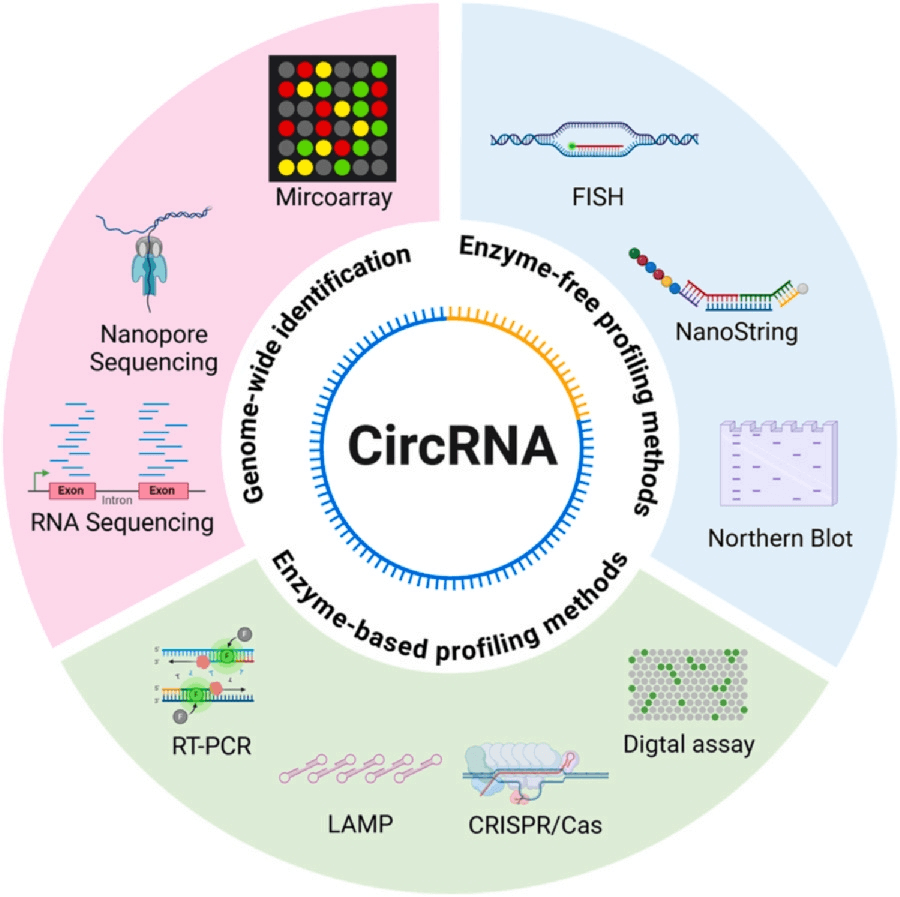
Recent advancements in molecular diagnostic methods for circular RNA (circRNA) are paving the way for improved cancer detection and treatment strategies. A comprehensive review published in the KeAi journal Biomedical Analysis outlines the latest developments in circRNA detection technologies, offering new hope for more accurate and efficient disease diagnosis.
CircRNA, a unique type of non-coding RNA, has gained significant attention in the scientific community since its regulatory functions were discovered in 2013. These molecules are now recognized as playing crucial roles in various diseases, including gastric, liver, and breast cancers. Their distinct expression patterns in tumors versus normal tissues make them promising biomarkers for cancer diagnosis and prognosis.
The study, led by Professor Jiasi Wang from Sun Yat-sen University, emphasizes the importance of sensitive and specific circRNA detection for understanding their biological functions and tracking disease progression. Current methods like RNA sequencing and RT-PCR, while widely used, have limitations. RNA sequencing can be inefficient and expensive, often missing low-abundance circRNAs, while RT-PCR may overestimate expression due to circRNA's unique structure.
To address these challenges, researchers are exploring innovative approaches such as isothermal amplification, CRISPR-based techniques, and digital droplet assays. These methods aim to provide more accurate and efficient ways to detect and quantify circRNAs, especially in complex intracellular environments.
The implications of this research are far-reaching. Improved circRNA detection could lead to earlier and more precise cancer diagnoses, potentially saving lives through timely interventions. Moreover, a better understanding of circRNA's role in cancer biology could inform the development of new targeted therapies.
For the medical and scientific communities, these advancements represent a significant step forward in molecular diagnostics. The ability to reliably detect and measure circRNAs could accelerate research into their functions and mechanisms, potentially uncovering new therapeutic targets for a range of diseases beyond cancer.
However, challenges remain. As Zequan Ye, the study's first author, points out, precisely detecting and quantifying circRNAs, particularly in intracellular environments, is still difficult due to their circular conformation and sequence overlap with related mRNAs. Overcoming these obstacles will be crucial for translating circRNA research into clinical applications.
The study also highlights the need for continued investment in this field. Supported by various national research programs and funding initiatives in China, this work underscores the global interest in advancing circRNA research and its potential impact on healthcare.
As the field of circRNA research continues to evolve, it holds the promise of transforming our approach to cancer diagnosis and treatment. The development of more sensitive and specific detection methods could lead to personalized medicine strategies, where circRNA profiles guide treatment decisions and monitor disease progression.
While the road from laboratory discoveries to clinical applications is often long and complex, the progress in circRNA detection methods represents a significant milestone. It offers hope for more effective cancer management strategies and opens new avenues for exploring the intricate world of non-coding RNAs in human health and disease.