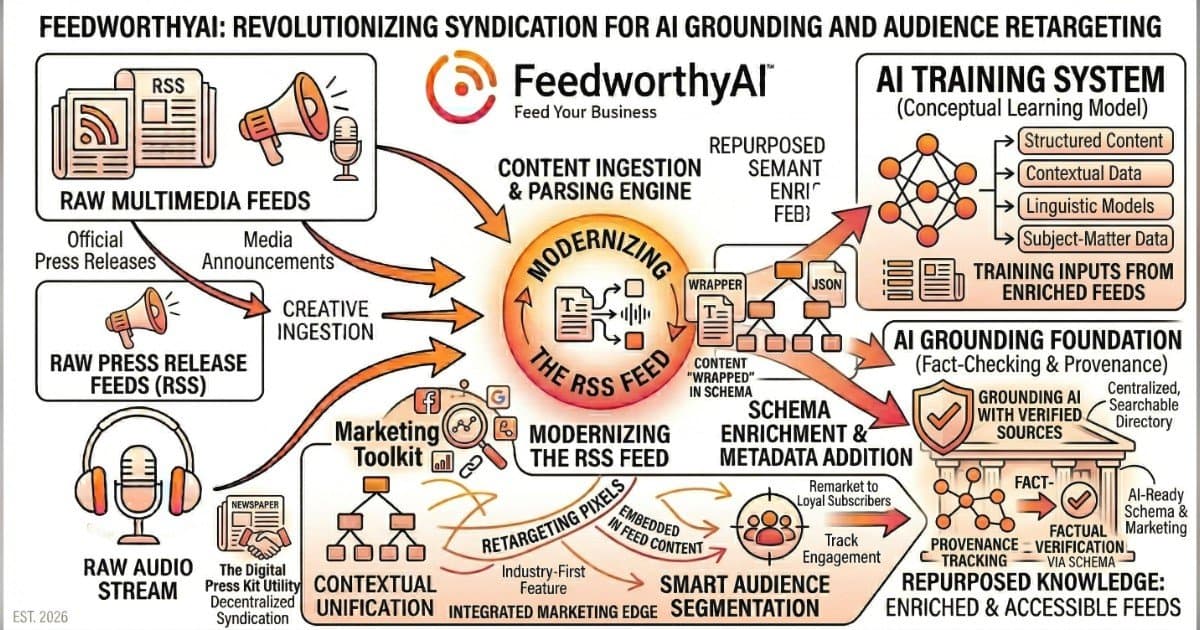
The resurgence of RSS (Really Simple Syndication) technology has taken a significant step forward with the launch of FeedworthyAI, a free platform designed to bridge the gap between traditional content syndication and modern artificial intelligence systems. As digital content becomes increasingly fragmented across walled gardens and opaque algorithms, this launch represents a practical solution for publishers seeking to maintain control over their distribution while ensuring their content remains relevant in an AI-dominated future.
Originally developed in the late 1990s as the backbone of the "Open Web," RSS allowed users to subscribe directly to blogs and news sites without intermediaries. The technology was sidelined during the rise of social media platforms in the late 2000s, which prioritized algorithmic feeds over direct connections. Today, as both users and publishers grow weary of "black box" algorithms, RSS is experiencing a substantial resurgence as the most efficient, lightweight, and decentralized method for content syndication across the internet.
FeedworthyAI addresses a critical challenge in this evolving landscape: ensuring content is not only seen by human audiences but also accurately understood and properly cited by AI models. The platform provides a centralized, searchable directory where publishers can submit their RSS feeds, making niche content more discoverable to AI aggregators, researchers, and power users. This directory functions as a curated index that enhances content visibility beyond traditional human search.
More significantly, FeedworthyAI offers advanced schema application tools that allow publishers to "wrap" their feeds in structured metadata. This structured data tells AI systems exactly what the content is and why it represents a reliable source, facilitating more effective AI training and AI grounding—the processes of fact-checking and real-time retrieval that AI models require to function accurately. By making content more machine-readable, publishers can ensure their work contributes to and is properly represented within the growing ecosystem of generative AI.
The platform also introduces innovative monetization capabilities previously unavailable for RSS feeds. In an industry first, FeedworthyAI allows publishers to embed retargeting pixels directly within their feed content. This enables creators to track engagement and remarket to their most loyal RSS subscribers across other digital platforms, transforming passive feed consumption into an active lead-generation engine. The system integrates with seven popular advertising and analytics services, including universal tracking pixels from industry leaders like Google Ads, Meta (Facebook/Instagram), and X (formerly Twitter), allowing for precise attribution of off-platform engagement.
Industry experts have welcomed the launch as addressing a fundamental need in content creation and distribution. Justin McKenzie, host of the Building Texas Show podcast, noted that the biggest hurdle for creators isn't just producing quality content but ensuring it reaches the right audience in a crowded market. FeedworthyAI, he suggests, bridges the gap between traditional syndication and modern discovery methods, making content more likely to be found, indexed, and valued by the next generation of search and AI tools.
By offering these advanced tools for free, FeedworthyAI aims to level the playing field between independent journalists, niche bloggers, small publishers, and major media conglomerates. The platform's commitment to keeping the internet open and accessible ensures that diverse voices can maintain technical parity when it comes to AI discovery and audience retention. This approach supports the broader movement toward a more decentralized and structured web where content can thrive in a machine-readable world without sacrificing publisher control or user privacy.
The implications of this development extend beyond individual publishers to the entire digital ecosystem. As AI systems become increasingly central to how information is discovered, processed, and utilized, ensuring they have access to accurate, well-structured content from diverse sources becomes crucial for maintaining a healthy information environment. FeedworthyAI's tools represent a practical step toward that goal, providing the infrastructure needed for content to remain viable and valuable in the age of artificial intelligence.