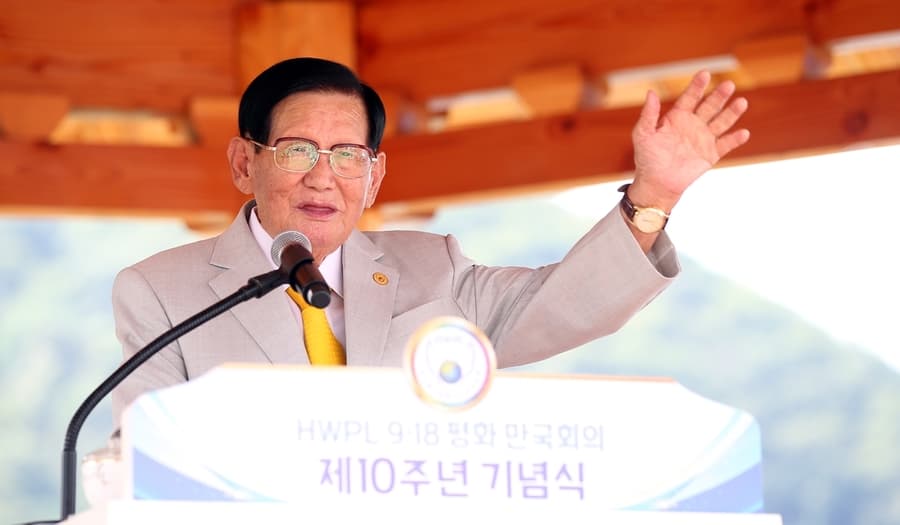
In a significant gathering for world peace, over 100,000 people convened in Gapyeong-gun, Korea, to commemorate the 10th anniversary of the Heavenly Culture, World Peace, Restoration of Light (HWPL) Peace Summit. The event, held on September 20, 2024, under the theme "Building a Global Community of Peace through Regional Cooperation," brought together global leaders and citizens to celebrate a decade of peace-building efforts and strategize for future global unity.
The summit, hosted by HWPL, an organization with consultative status to the United Nations Economic and Social Council (ECOSOC) and associated with the Department of Global Communications (DGC), marks a pivotal moment in the ongoing global peace movement. HWPL Chairman Man Hee Lee led the proceedings, which were attended by notable figures including Great Dharma Master Hyecheon of the Jogye Order of Korean Buddhism and José Honorio da Costa Ferreira Jerónimo, East Timor's Minister of Higher Education, Science, and Culture.
This year's summit builds upon the foundation laid in 2014 when the inaugural event in Seoul attracted over 1,000 leaders from various sectors across 140 countries. The focus then, as now, was on conflict resolution, religious harmony, and the implementation of legal measures for sustainable peace. Chairman Lee's commemorative speech at the 10th anniversary event emphasized unity and cooperation, urging participants to transcend differences and work collectively towards global peace.
A significant development announced at the summit was HWPL's initiative to establish a "regional network" for peace, tailored to address local characteristics and challenges. This approach aims to actively confront threats to peace while leveraging collective capabilities. To this end, HWPL has formed partnerships with intergovernmental organizations such as the Group of Seven Plus (G7+) and the Latin American and Caribbean Parliament (PARLATINO), both of which have substantial memberships and focus on promoting peace, stability, and development.
The summit also saw the launch of the nationwide "Accompany: Connecting Korea" campaign, formalized through a Memorandum of Understanding (MOU) signed during the ceremony. This campaign, which builds on a pilot program initiated in major Korean cities in July, aims to collaborate with over 230 civic organizations to bridge cultural gaps across generations and implement diverse peace activities. The "Accompany" campaign is seen as a modern continuation of the Saemaul Movement, which played a crucial role in South Korea's economic development and social transformation in the late 20th century.
The importance of this summit and its outcomes cannot be overstated. In a world grappling with various forms of conflict and division, HWPL's efforts to create a global community of peace through regional cooperation offer a beacon of hope. The emphasis on establishing regional networks recognizes the need for localized approaches to peace-building while maintaining a global perspective. This strategy has the potential to address peace threats more effectively and create sustainable solutions tailored to specific cultural and social contexts.
Furthermore, the "Accompany" campaign's focus on overcoming social conflicts rooted in generational, regional, gender, and ideological differences through social solidarity and cooperation is particularly relevant in today's polarized societies. By encouraging active participation from citizens of all backgrounds in promoting peace, HWPL is fostering a grassroots movement that could have far-reaching impacts on social cohesion and conflict resolution.
The partnerships formed with international organizations like G7+ and PARLATINO signify a growing recognition of HWPL's work and could lead to more coordinated and effective peace initiatives on a global scale. These collaborations have the potential to influence policy-making and promote peace-centric development strategies across multiple nations.
As HWPL moves forward with its plans to hold various sessions worldwide and encourage individuals to become "messengers of peace," the organization is setting the stage for a more inclusive and participatory approach to peace-building. This strategy of collecting and sharing messages of peace from citizens globally could create a powerful narrative of unity and shared purpose, potentially influencing public opinion and policy decisions on a broader scale.
The 10th Anniversary HWPL Peace Summit serves as a reminder