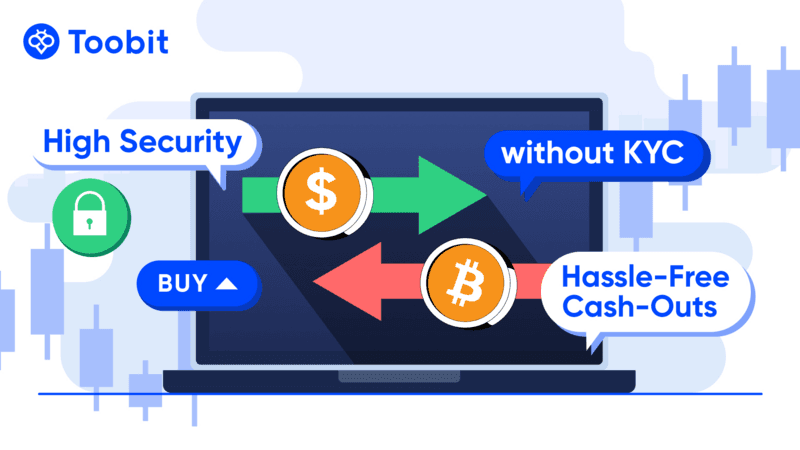
In a significant move that could reshape the landscape of cryptocurrency trading, Toobit has announced a suite of user-centric features designed to enhance privacy, accessibility, and security. The exchange's no KYC (Know Your Customer) policy, combined with an easy cash-out process and robust security measures, positions Toobit as a potential game-changer in the competitive world of digital asset trading.
The elimination of KYC requirements stands out as a key feature of Toobit's offering. This policy addresses growing concerns about data privacy and security in the digital age. By allowing users to trade without submitting personal information, Toobit not only protects user privacy but also opens up cryptocurrency trading to a broader global audience, potentially accelerating crypto adoption in regions with stringent regulatory environments.
Toobit's approach to user privacy is complemented by its commitment to security. The exchange has obtained ISO 27001 certification, a globally recognized standard for information security management. This certification underscores Toobit's dedication to protecting user assets from both internal and external threats, a critical concern in an industry that has seen its share of high-profile security breaches.
Further bolstering its security credentials, Toobit has partnered with Cobo to implement advanced wallet custody solutions. These include cold storage, asset segregation, and multi-signature technologies, providing users with state-of-the-art protection for their digital assets. The implementation of these measures reflects a growing trend in the crypto industry towards prioritizing user asset security.
In a move that sets a new standard for transparency in the cryptocurrency exchange sector, Toobit maintains a Proof of Reserves (PoR) ratio of more than 1:1 to its assets under management. This means that all customer assets are fully backed and liquid, a fact that can be independently verified. The implementation of PoR addresses one of the most significant concerns in the crypto community – the assurance that exchanges actually hold the assets they claim to have.
The exchange's easy cash-out process further enhances its appeal to users. With streamlined withdrawals, multiple withdrawal options, and competitive fees, Toobit aims to simplify the often complex process of converting cryptocurrency to cash. This feature could be particularly attractive to new crypto users who may be intimidated by the technical aspects of cryptocurrency trading and management.
The implications of Toobit's approach extend beyond individual user benefits. By prioritizing privacy and eliminating barriers to entry, the exchange could potentially drive increased participation in the cryptocurrency market. This could lead to greater liquidity and stability in the crypto ecosystem, benefiting not just Toobit users but the broader market as well.
However, the no KYC policy may raise questions about regulatory compliance in some jurisdictions. As global regulatory frameworks for cryptocurrency continue to evolve, exchanges like Toobit may face challenges in balancing user privacy with regulatory requirements. The success of this model could influence future regulatory approaches to cryptocurrency trading.
Toobit's innovations come at a time when the cryptocurrency industry is facing increased scrutiny and calls for greater regulation. By emphasizing security and transparency while maintaining user privacy, Toobit is charting a course that could influence how other exchanges operate in the future. As the crypto market continues to mature, the balance between privacy, security, and regulatory compliance will likely remain a key issue for exchanges and users alike.
As cryptocurrency continues to integrate into the global financial system, exchanges like Toobit that prioritize user experience, security, and privacy may play a crucial role in shaping the future of digital asset trading. The success of this model could potentially lead to a shift in how cryptocurrency exchanges operate, placing greater emphasis on user control and data protection.